
Key Takeaways:
- A vinegar-like smell from your AC often signals microbial growth, moisture buildup, or chemical reactions in the system.
- Common sources include mold and mildew on coils and ductwork, clogged condensate drain lines, and bacterial growth on components.
- Regular maintenance—such as replacing filters, cleaning coils, and clearing drain lines—can prevent odors and improve system efficiency.
- Mold thrives in warm, damp environments; stagnant water or high humidity in the system increases the risk of sour odors and potential health concerns.
- DIY solutions, like flushing the drain line, cleaning coils, and inspecting vents, can address minor odor issues, but extensive mold or duct contamination requires professional help.
- Ignoring vinegar-like odors can lead to increased energy consumption, mechanical strain, and higher repair costs over time.
- Seasonal checks and proactive inspections help prevent odor problems and maintain clean, efficient airflow throughout the home.
Few things are more frustrating than turning on your air conditioner on a hot day, only to be greeted by a pungent vinegar-like smell. Not only is the odor unpleasant, but it can also indicate underlying issues with your HVAC system. In this article, we’ll break down the common causes of this smell, the health and safety implications, and practical steps you can take to fix it.
What Causes Your AC to Smell Like Vinegar?

A vinegar-like smell coming from your AC usually points to microbial growth, moisture buildup, or chemical reactions within the system. Identifying the cause is crucial because it determines the best way to fix the problem. Here are some of the most common culprits:
- Mold and Mildew Growth: This is the most frequent cause of vinegar-like odors. Moist, warm areas in your AC—like the condensate pan, evaporator coil, and ductwork—create the perfect environment for fungal growth. Even small patches of mold can release a noticeable sour odor throughout your home.
- Dirty or Clogged Drain Lines: Your AC produces condensation as it cools the air. If the condensate drain line is blocked or partially clogged, water can pool and become a breeding ground for bacteria and mold. This stagnant water often generates the strong vinegar smell that travels through your vents.
- Bacterial Growth on Coils: Over time, evaporator coils can collect dust, debris, and moisture. These conditions are ideal for bacteria to grow. When the system runs, the bacterial activity can release a sharp, sour smell similar to vinegar.
- Chemical Reactions: Occasionally, cleaning agents, leftover refrigerant, or other chemicals inside the system can react with moisture or metals. This can create unusual odors that resemble vinegar, especially if the system hasn’t been maintained regularly.
Understanding these causes is essential. Treating a blocked drain line is very different from addressing mold in the ductwork, so accurate diagnosis will save both time and money.
Could Poor Maintenance Be the Reason?
Many homeowners underestimate the role of regular AC maintenance in odor prevention. A system that’s neglected can quickly become a source of sour, unpleasant smells. Dust, debris, and moisture accumulation can create the perfect environment for microbial growth.
To prevent vinegar-like odors, make it a habit to:
- Replace air filters every 1–3 months, depending on usage.
- Clean or inspect evaporator coils annually.
- Flush or clear the condensate drain line to prevent standing water.
- Check ductwork for visible mold or moisture.
By keeping up with these maintenance tasks, you’re not just preventing odors—you’re improving airflow, efficiency, and overall system health.
How Does Mold Grow in Your AC?
Mold thrives in warm, damp environments, and your AC system can provide exactly that if left unattended. Common hotspots include:
- Evaporator coils – moisture collects here as the system cools air.
- Condensate pans – water can sit for days or weeks if drainage is slow or blocked.
- Ductwork – particularly in sections that are poorly insulated or have accumulated moisture.
When mold develops, it releases microbial volatile organic compounds (mVOCs), which are responsible for the sour, vinegary odor. If left unchecked, these spores can spread throughout your home, potentially affecting indoor air quality and aggravating allergies or respiratory problems.
Is It Safe to Run an AC That Smells Like Vinegar?
A vinegar smell doesn’t usually indicate an immediate hazard, but it does signal that your AC system may have problems that could worsen over time. Running a system that harbors mold or bacteria can lead to:
- Aggravated allergies or asthma symptoms
- Respiratory irritation from prolonged exposure to spores
- Increased wear and tear on the system, leading to higher energy use and repair costs
Ignoring the smell may result in more expensive mechanical issues down the line, so it’s better to address the source early.
Can Condensation Problems Cause Odors?
Yes. AC units remove heat and moisture from indoor air, and proper drainage is crucial. When water doesn’t drain as intended due to a clogged line, cracked pan, or tilted system, it can stagnate and promote bacterial growth, creating the sour vinegar smell.
Key points to check:
- Inspect the condensate drain line for blockages or algae buildup.
- Ensure the condensate pan is intact, level, and free of cracks.
- Confirm the system is properly leveled to allow water to flow toward the drain.
- Consider using a small amount of disinfectant in the drain line to reduce microbial growth.
Regular attention to these areas can prevent odors before they develop.
How to Identify the Source of the Vinegar Smell
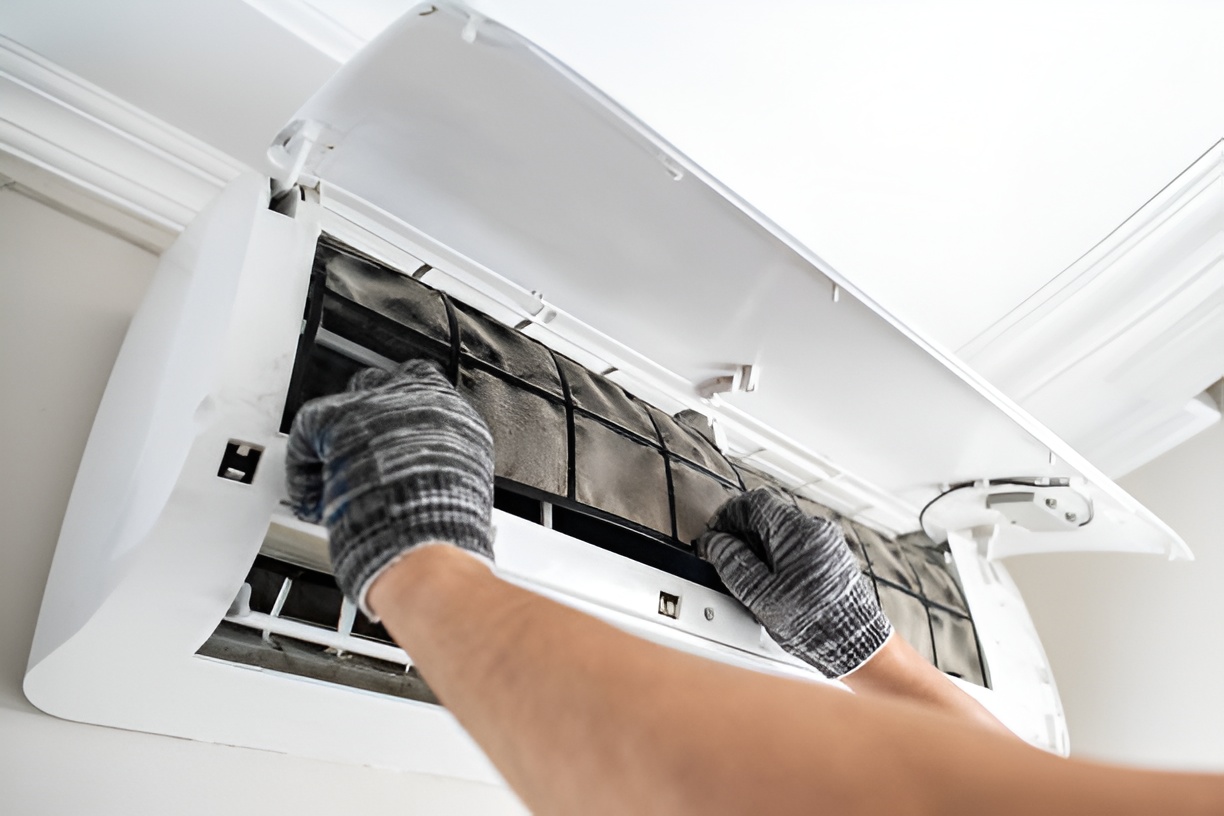
Pinpointing the origin of the smell can save both time and money. Here’s a step-by-step approach:
- Check the Air Filter: A clogged or damp filter can trap mold spores and bacteria.
- Inspect the Evaporator Coil: Look for signs of mold, mildew, or mineral buildup.
- Smell the Ductwork: Musty or sour odors from vents often indicate microbial growth inside the ducts.
- Examine the Condensate Pan: Standing water in the pan can harbor bacteria and mold.
- Consider Professional Tools: Technicians can use UV lights or air quality monitors to detect hidden mold.
Once you locate the source, you can determine whether a simple cleaning is sufficient or if professional intervention is required.
DIY Fixes to Reduce the Vinegar Smell
Some AC odor issues can be addressed without a technician, especially if they’re caught early. Practical steps include:
- Replace the air filter with a new, high-quality one to prevent trapped moisture and spores.
- Flush the condensate line using a bleach-and-water solution to kill bacteria and clear blockages.
- Clean the evaporator coil gently with an appropriate coil cleaner to remove mold or debris.
- Wipe down the condensate pan to remove standing water and bacteria.
- Check and clean vents to ensure ducts are free of visible mold or dust buildup.
- Monitor humidity levels in your home, as high humidity encourages mold growth.
For extensive mold contamination or ductwork problems, it’s best to hire a professional to avoid spreading spores or causing damage.
When to Call a Professional
Certain issues are best handled by certified HVAC technicians:
- Persistent vinegar smell after cleaning
- Mold deep inside ductwork or unreachable coils
- Refrigerant leaks
- Unexplained electrical or mechanical problems
A professional can not only eliminate the odor but also ensure your system is running safely and efficiently.
How AC Smells Can Affect Your Energy Bills
Reducing energy bills with HVAC practices starts with keeping your system clean and well-maintained. A malfunctioning or dirty AC doesn’t just produce unpleasant odors—it also works harder than it should to cool your home. This extra effort forces the system to consume more electricity, which can lead to higher energy bills over time. Vinegar-like smells are often a sign of underlying issues such as clogged drains, dirty coils, or microbial growth, all of which can reduce your AC’s efficiency.
Some ways addressing these odor problems helps include:
- Improved airflow: Cleaning clogged filters, coils, or drain lines ensures air moves freely through the system, reducing the workload on the compressor and fan.
- Reduced strain on components: Removing mold, mildew, or bacterial buildup prevents the system from overworking, which can extend the life of your AC unit.
- Better cooling performance: When your AC is clean and functioning properly, rooms reach the desired temperature faster, consuming less energy overall.
- Lower risk of costly repairs: Catching problems early can prevent major mechanical failures that would otherwise require expensive replacement or repairs.
Preventing Future Odors
Preventing vinegar smells is easier than fixing them once they occur. Following simple home heating and cooling tips can help you keep your AC fresh and running efficiently throughout the year. Some practical steps include:
- Schedule annual AC maintenance with a professional – A yearly inspection can catch minor issues before they turn into odors or costly repairs.
- Replace filters every 1–3 months depending on usage – Clean filters keep airflow smooth and reduce trapped moisture that fosters microbial growth.
- Keep condensate lines clean and clear – Flushing the drain line regularly prevents water buildup and bacterial growth.
- Use a dehumidifier in high-humidity areas – Reducing indoor humidity makes it harder for mold and bacteria to thrive.
- Regularly inspect ductwork and accessible system components – Look for visible mold, leaks, or standing water.
- Clean vents and registers – Dust and debris in vents can trap moisture and contribute to unpleasant smells.
- Check insulation around ductwork – Poor or damaged insulation can lead to condensation inside ducts, creating an environment for mold growth.
- Monitor your indoor humidity – Aim for 40–50% humidity to discourage microbial growth.
- Run your AC regularly, even in cooler months – Systems left unused can accumulate stagnant water in pans or coils.
Common Misconceptions About AC Odors
Some homeowners mistake all AC smells for mold or vinegar. Here are some points to clarify:
- Musty vs. Vinegar: Musty odors usually indicate mold or mildew, while sharp vinegar smells may point to bacterial growth.
- Chemical Smells: Sweet or metallic odors may signal refrigerant issues, which are different from vinegar-like bacterial odors.
- Timing Matters: Smells that appear only during startup may be condensation-related, whereas persistent smells indicate deeper issues.
Understanding the type of smell can help you address the correct problem efficiently.
Long-Term Benefits of Odor-Free AC
Maintaining a clean, well-functioning AC system has several long-term benefits:
- Improved indoor air quality
- Lower risk of allergies and respiratory issues
- Greater system efficiency and lower energy bills
- Longer HVAC lifespan and fewer costly repairs
Seasonal Checks to Avoid Vinegar Smells
AC systems can be particularly prone to odor problems during certain seasons:
- Spring/Summer: High humidity increases moisture accumulation, leading to mold growth.
- Fall/Winter: Infrequent use can allow stagnant water to breed bacteria.
Simple seasonal inspections—like checking filters, condensate lines, and coil cleanliness—can prevent smells before they appear.
Final Thoughts
A vinegar-like smell from your AC is more than just a nuisance—it’s a signal that your system may need attention. By understanding the causes, performing regular maintenance, and knowing when to call a professional, you can keep your air conditioning running smoothly, improve indoor air quality, and extend the life of your system.
Remember, small preventive steps today—like cleaning the condensate pan, replacing filters, and following general home heating and cooling tips—can save both headaches and money down the line. With a proactive approach, your AC can stay fresh, efficient, and safe for your household.