Your home is constantly sending you messages, but most of them don’t look like obvious emergencies. A faint musty smell, a water bill that creeps up for no reason, or a ceiling stain the size of a quarter can easily be dismissed as minor quirks. In reality, these small signals are often the first visible clue that a major system in your home is struggling or already failing. Learning to recognize these warning signs early can save you thousands of dollars and prevent a small issue from becoming a full-blown disaster.
Musty Odors and Unexplained Humidity in the Basement
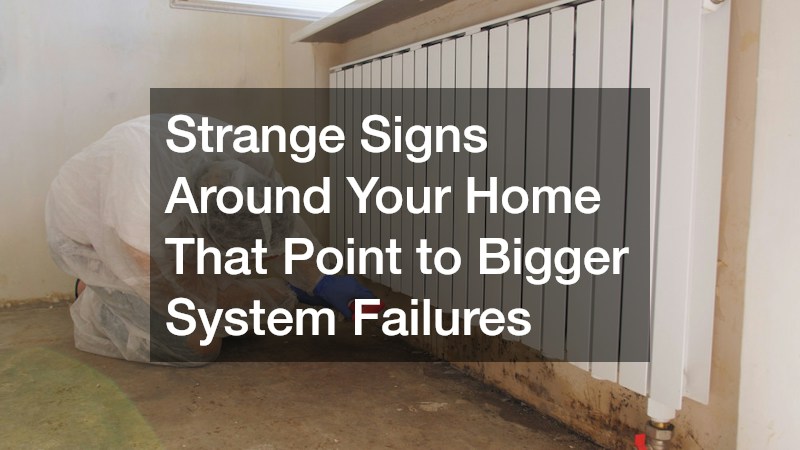
A damp, earthy smell in your basement is rarely just “how basements smell.” In most cases, it points to moisture intrusion through foundation cracks, poor grading outside, or a failing sump pump system that isn’t keeping pace with groundwater. If humidity readings in the space regularly climb above 55%, that’s a reliable sign moisture is accumulating faster than it can evaporate, even if you can’t pinpoint a visible leak. The source often traces back to simple exterior issues that get overlooked for years. Downspouts that dump water right next to the foundation, soil that slopes toward the house instead of away from it, or clogged gutters can all funnel water straight into your basement walls. A quick check with a $10 hygrometer or a walk around the yard after heavy rain can often reveal more than an expensive inspection. Left unaddressed, that moisture invites mold growth, wood rot, and structural damage that can compromise the rest of the home above it. Mold colonies can establish themselves within 24 to 48 hours of sustained dampness, and by the time you see visible spotting on drywall or framing, the contamination is usually well established behind the surface. Wood rot works more slowly but just as destructively, quietly weakening joists and sill plates that support the floors above. If you’ve been dreaming about basement finishing to add usable living space, resolving the underlying moisture issue has to come first, or you risk trapping the problem behind new drywall. Insulation, paint, and framing can all seal in existing dampness, turning a manageable repair into a full remediation project. A dehumidifier, properly sloped grading, and a sump pump with battery backup are far cheaper investments now than tearing out finished walls later.
That musty smell is mold or mildew offgassing, and it means moisture is getting in somewhere on a regular basis. Even if you can’t see water stains or visible growth, a damp basement odor usually points to a moisture source that’s been active long enough to become a habit rather than a one-time event. A hygrometer reading above 55% relative humidity in the basement is a good early warning sign worth investigating before mold becomes visible. Professional moisture testing can tell you whether you’re dealing with condensation, a hydrostatic pressure issue, or an actual plumbing leak hidden in the walls or floor. Technicians often use moisture meters on the walls and floor, along with a basic humidity reading, to pinpoint whether water is wicking up through the concrete or seeping in from outside grading issues. In some cases they’ll also check for small cracks in the foundation where groundwater can intrude after heavy rain. Catching this early is far cheaper than repairing a finished basement that has to be torn out later. A simple dehumidifier fix might run a few hundred dollars, while unaddressed hydrostatic pressure can eventually require exterior waterproofing, French drains, or a sump pump system costing thousands. Letting the problem linger also raises the risk of structural wood rot or mold remediation, both of which are far more invasive and expensive than solving the moisture problem at its source.
- Persistent musty smell even after cleaning, often signaling mold or mildew growing behind walls or under flooring
- Visible white, chalky residue (efflorescence) on basement walls, a sign that moisture is migrating through the concrete and leaving mineral deposits behind
- Peeling paint or bubbling drywall near the floor line, indicating trapped moisture is breaking down the material from the inside out
- Condensation on windows or pipes in the lower level, especially during humid months, pointing to excess moisture in the air
- Humidity readings above 55% on a basement hygrometer, which create ideal conditions for mold growth and dust mites
- Warped or soft baseboards and door trim, suggesting prolonged water exposure near the foundation
- A sump pump that runs frequently or struggles to keep up, hinting at a larger drainage or grading issue outside the home
Unexplained Spikes in Your Water Bill

When your water bill jumps significantly without a clear reason, such as filling a pool or watering a new lawn, it’s a strong indicator that water is escaping somewhere it shouldn’t be. These leaks are often hidden inside walls, under slabs, or underground between the meter and the house, making them invisible during a casual walkthrough. Professional leak detection equipment can pinpoint the exact location of a hidden leak using acoustic sensors or thermal imaging, sparing you from guesswork and unnecessary demolition. Ignoring a sudden spike can mean paying for thousands of gallons of wasted water while the leak slowly damages flooring, subfloors, and even foundation soil.
It’s worth checking your water meter during a period when no water is being used in the house. If the dial is still moving, that’s a clear sign water is flowing somewhere behind the scenes, and it’s time to investigate before the damage spreads further.
Soggy Patches or Sinkholes in the Yard
A consistently soggy patch of lawn, a sudden sinkhole, or an area of grass that’s noticeably greener and lusher than the rest of the yard can indicate a serious problem below the surface. Often, this points to a failing septic tank that is leaching wastewater into the soil rather than processing it properly. In other cases, it signals a cracked or collapsed pipe that’s been slowly eroding the ground above it. Either scenario requires prompt attention, since untreated wastewater in your yard poses health risks to your family and pets.
- Standing water in the yard even without recent rain
- Strong sewage odor near the drain field
- Unusually fast-growing or bright green grass in one area
- Gurgling sounds from drains inside the house
Slow Drains and Gurgling Sounds Throughout the House
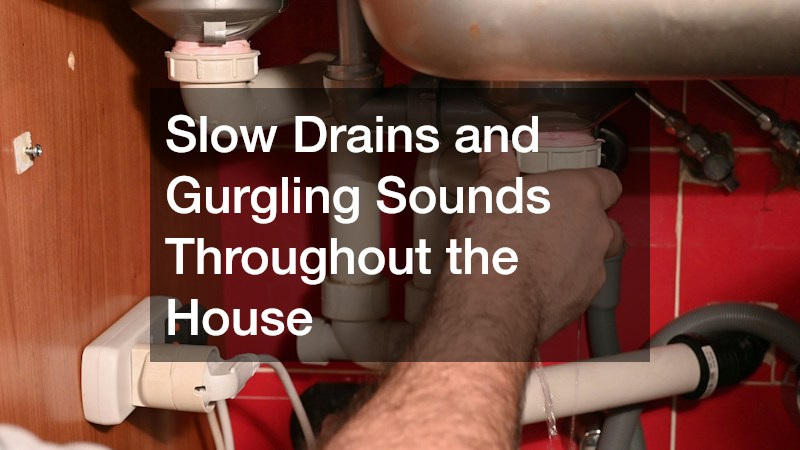
One slow drain is usually a localized clog, but when multiple drains throughout the house are sluggish at the same time, the problem is likely further down the line. This pattern often points to an issue with the sewer lateral, the main pipe connecting your home’s plumbing to the municipal sewer system. Tree roots, pipe collapse, and grease buildup are common culprits, and the problem tends to worsen gradually rather than appearing all at once.
A licensed plumber can run a camera inspection through the main line to see exactly what’s happening without digging up your yard blindly. Catching a partially blocked line early can mean a simple cleaning instead of a full pipe replacement, which is a significantly bigger and more expensive project.
Ceiling Stains and Bubbling Paint on Upper Floors
A brown ring on the ceiling or paint that’s bubbling and peeling away from the surface almost always means water has found its way in from somewhere above. While a leaking pipe is possible, roof-related water intrusion is one of the most common sources, especially in homes with low-slope or flat sections. A qualified flat roofing contractor can identify whether pooling water, a failed membrane, or damaged flashing is allowing moisture to seep through to the structure below. The longer this goes unaddressed, the more likely it is that insulation, framing, and drywall will need to be replaced rather than simply dried out.
Staining that keeps reappearing after you’ve repainted is a particularly strong signal that the source hasn’t been fixed yet. Treating only the cosmetic symptom without finding the actual entry point is one of the most common and costly mistakes homeowners make.
Inconsistent Temperatures and Rising Energy Bills

If certain rooms never seem to reach a comfortable temperature no matter how you adjust the thermostat, your heating or cooling system may be struggling with more than just normal wear. Ductwork leaks, a failing blower motor, or a unit that’s simply too old to run efficiently can all create these uneven results. A bedroom that’s always five or ten degrees off from the rest of the house is a classic sign that air isn’t being distributed properly, whether due to blocked vents, crushed ductwork, or a system that was undersized for your home to begin with. A steady rise in your energy bills, even when usage habits haven’t changed, often confirms that the system is working harder than it should to deliver the same results. If your monthly costs climb by 10 to 20 percent without a corresponding jump in outdoor temperatures or household activity, that’s a meaningful red flag rather than a fluke. Dirty filters, low refrigerant, aging ductwork, and worn-out components all force the system to run longer cycles just to maintain the setpoint you’ve chosen. It’s also worth paying attention to how often the system cycles on and off throughout the day. Short, frequent cycles can point to a unit that’s overheating or oversized for the space, while unusually long cycles often mean it’s straining to push air through blocked or leaky ducts. Either pattern adds unnecessary wear and drives up costs over time. Scheduling heating repair at the first sign of inconsistent performance can prevent a full breakdown during the coldest or hottest stretch of the year. Catching the problem early, whether it’s a simple duct seal or a motor replacement, is almost always cheaper than an emergency service call when the system fails completely.
- Rooms that are noticeably warmer or cooler than the rest of the house, often a sign of leaky ductwork, poor insulation, or a failing damper
- Short cycling, where the system turns on and off every few minutes instead of running full cycles, which strains the compressor and wastes energy
- Unusual banging, squealing, or rattling sounds from the unit, which can point to loose parts, a failing motor, or worn belts
- A gradual increase in utility costs over several months, even without a change in weather or usage habits, suggesting declining efficiency
- Thermostat settings that no longer match actual room temperatures, hinting at sensor issues or airflow blockages
- Vents blowing weak or inconsistent airflow, which may signal clogged filters, duct leaks, or a struggling blower motor
Aging Cooling Equipment and Frequent Repairs
Air conditioning systems typically last between 12 and 15 years, and as they approach the end of that lifespan, breakdowns tend to become more frequent and more expensive. If you find yourself calling for repairs more than once a year, or if a technician has mentioned that a major component like the compressor is failing, it may be more cost-effective to consider AC replacement rather than continuing to patch an aging system. Modern units are also significantly more energy efficient, which means a replacement can pay for part of itself over time through lower monthly bills.
Refrigerant type is another consideration, since older systems that use outdated refrigerants can become more expensive to service as supplies diminish. A professional evaluation can help you weigh the real cost of repeated repairs against the long-term value of a new, more reliable system.
Lukewarm Water and Rusty Discoloration From Faucets

Water that never quite gets hot, takes longer than usual to warm up, or comes out with a rusty tint is a sign that your water heater may be nearing failure. Sediment buildup inside the tank reduces efficiency over time and can eventually lead to corrosion that causes leaks. Popping or rumbling noises coming from the unit are another red flag, often caused by mineral deposits hardening at the bottom of the tank. When a unit reaches the end of its service life, professional water heater installation ensures the replacement is properly sized, vented, and connected, which matters both for safety and for getting consistent hot water throughout the house.
- Water that fluctuates between hot and cold unexpectedly
- Rust-colored water from the hot tap specifically
- Pooling water or dampness around the base of the tank
- A unit that is more than 10 years old
Sagging Rooflines and Unusual Creaking in Outbuildings
Garages, workshops, and large storage structures carry their own warning signs that are easy to overlook simply because people don’t visit them daily. A sagging ridge line, doors that no longer close properly, or new cracks in the slab can all indicate structural stress building in the roof or support system. This is especially relevant for clear span buildings, which rely on their frame design to carry weight without interior support columns, meaning any weakness in that frame affects the entire structure’s integrity. Catching these signs early allows for targeted reinforcement rather than a full structural rebuild.
Unusual creaking sounds during wind or snow loading, along with visible gaps where the roof meets the walls, should prompt a professional structural assessment sooner rather than later. These buildings are often used to store valuable equipment or vehicles, so protecting the structure itself is just as important as protecting what’s inside it.
None of these signs exist in isolation, and many of them are connected to each other in ways that aren’t obvious at first glance. A damp basement, a sluggish drain, and a spike in your water bill could all trace back to the same underlying plumbing issue, for example. The best approach is to take these small clues seriously and bring in a qualified professional to investigate before a manageable repair turns into a major reconstruction project. Trust your instincts when something about your home feels off, and act on it while the fix is still simple.