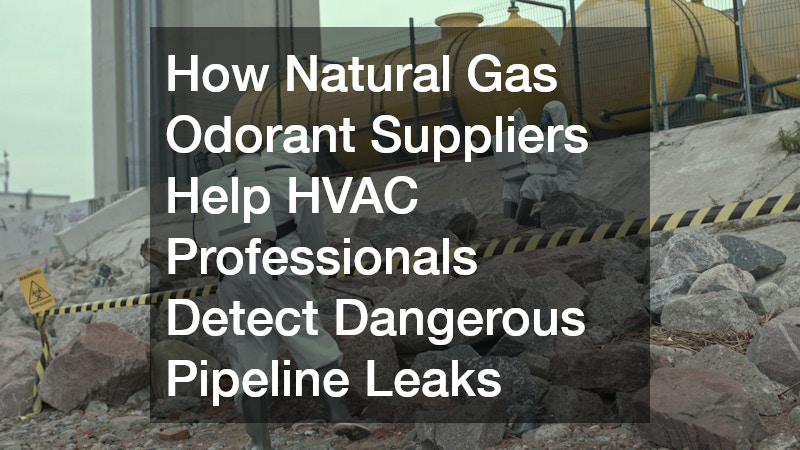
The modern HVAC industry relies on a complex web of technology, training, and safety protocols to keep residential and commercial environments comfortable and secure. Technicians install intricate ductwork, calibrate high-efficiency furnaces, and service complex boiler systems daily. While managing airflow and energy efficiency is a major part of the job, safety remains the absolute highest priority. Among the various hazards an HVAC professional might encounter in the field, a natural gas leak is arguably the most critical and time-sensitive.
When a furnace valve fails, a gas line cracks, or a fitting loosens, a rapid accumulation of combustible gas can lead to catastrophic property damage or loss of life. However, detecting these leaks would be nearly impossible without a crucial chemical intervention that happens long before the gas ever reaches a building.
Natural gas in its raw, organic state is entirely colorless and completely odorless. The distinct, pungent scent that everyone associates with a gas leak—resembling rotten eggs or boiling cabbage—is actually an artificial additive. Understanding how this vital additive is manufactured, distributed, and monitored reveals the profound impact that chemical engineering has on daily field operations.
The Chemical Necessity of Artificial Odorization
Because methane is inherently undetectable by human senses, utility networks and regulatory bodies require strict odorization protocols. If a pipeline were to rupture or leak without a warning scent, the gas could reach explosive concentrations before anyone in the immediate vicinity realized there was a danger. To prevent these silent catastrophes, specialized chemical companies step in to provide the critical warning agents that keep the public safe.
These companies produce highly concentrated sulfur-based chemical compounds, primarily known as mercaptans or thiols, as well as tetrahydrothiophene (THT). These specific chemicals are chosen because the human nose is incredibly sensitive to them, even at microscopic concentrations measured in parts per billion. The compounds must be highly stable so they do not easily break down inside steel or plastic pipelines, ensuring the distinct warning scent remains intact over hundreds of miles of transit.
The Critical Partnership with Field Technicians
When a technician steps onto a job site to service a faulty heating system, their first line of defense against a hazardous environment is their own sense of smell. Working behind the scenes, natural gas odorant suppliers provide the exact chemical formulations necessary to ensure that even a minor leak triggers an immediate olfactory warning for the technician. This early warning system allows HVAC pros to evacuate a property, shut off the main gas supply, and isolate the problem area before pulling out their electronic diagnostic tools.
This relationship between chemical formulation and field safety is a cornerstone of utility infrastructure. Technicians rely on the consistency of the scent to gauge the severity and proximity of a leak. If the chemical composition of the odorant varies, or if the intensity fluctuates wildly, field workers could easily misjudge the safety of an environment, putting themselves and building occupants at extreme risk.
Upgrading Safety Metrics Through Industry Innovations
The technology behind gas safety is constantly evolving to match the demands of modern infrastructure. Today, natural gas odorant suppliers do not merely ship bulk liquid chemicals in barrels; they work in tandem with hardware manufacturers to develop closed-loop, automated injection systems that adjust the chemical output based on real-time gas flow rates.
These high-tech advancements ensure that whether a pipeline is experiencing peak winter demand or a low-flow summer baseline, the concentration of the warning scent remains perfectly uniform. For the HVAC professional, this mechanical precision means that a leak will smell just as potent at 3:00 AM during a blizzard as it does on a mild autumn afternoon. This consistency allows for predictable troubleshooting and repeatable safety protocols across the entire service industry.
Training the Next Generation of HVAC Professionals
As the energy sector transitions toward more sustainable practices and introduces alternative fuels like hydrogen blends into existing pipelines, the science of leak detection must adapt. Companies that act as natural gas odorant suppliers are currently researching how traditional mercaptans interact with these new fuel mixtures. They must ensure that the introduction of green technologies does not compromise the reliable warning systems that field workers have depended on for nearly a century.
For trade schools and apprenticeship programs, this means that understanding the chemistry of gas additives is a vital part of a modern curriculum. Technicians must be taught not only how to fix a physical component, but also how environmental factors affect leak detection. Recognizing the smell is just the first step; understanding the limitations of the chemical scent allows a professional to properly utilize electronic combustible gas detectors to confirm that a workspace is truly safe before starting repairs.
The safety of our communities relies heavily on the quiet cooperation between heavy chemical manufacturing and local service technicians. Every time an HVAC professional successfully identifies a faulty furnace valve by smelling a faint hint of sulfur, a chain of meticulously engineered safety protocols has done its job. By relying on the steady, reliable products created by industrial chemical experts, contractors can confidently protect homes and businesses from the silent threat of methane accumulation. Maintaining a deep respect for the science of odorization ensures that the HVAC industry can continue to deliver comfort without ever sacrificing safety.
Related Posts

Why an AC Repair Company Is Worth the Investment
Maintaining a functional and efficient air conditioning system is essential for keeping your home comfortable during the hottest months of…

Why Does Your House Feel Humid?
Feeling uncomfortable in your own home due to excessive humidity can be frustrating. Understanding the causes behind why your house…
How Air Conditioning Works
In this YouTube video, the speaker discusses how air conditioning works. An AC system works by removing heat and humidity…